
Walki thermoforming basewebs
Fully Recyclable Mono-Material Basewebs for Thermoforming
Replace non-recyclable films with mono-material structures that offer precise deep-draw performance and high-speed processing efficiency.
Superior Structure Fully Recyclable

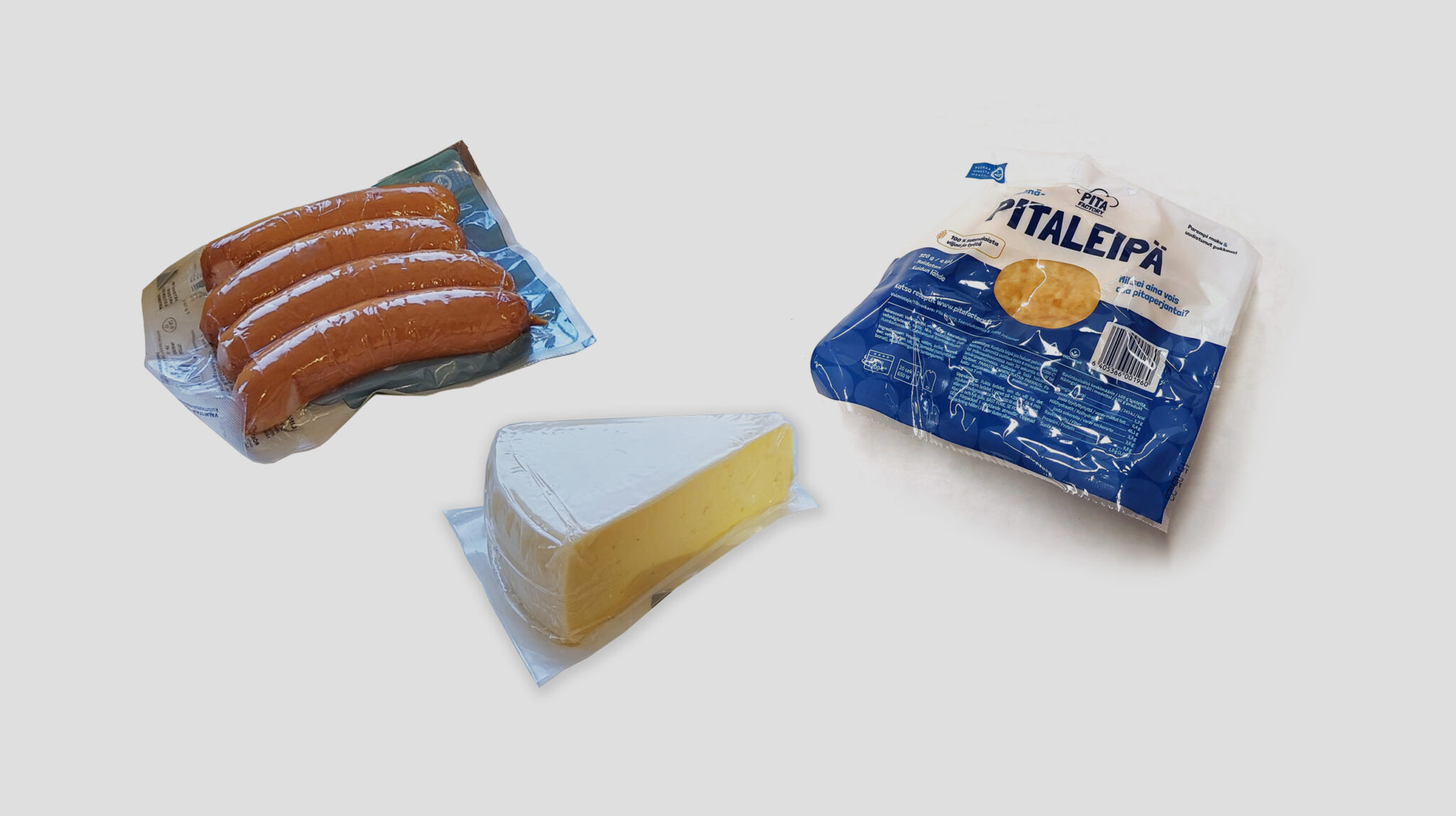
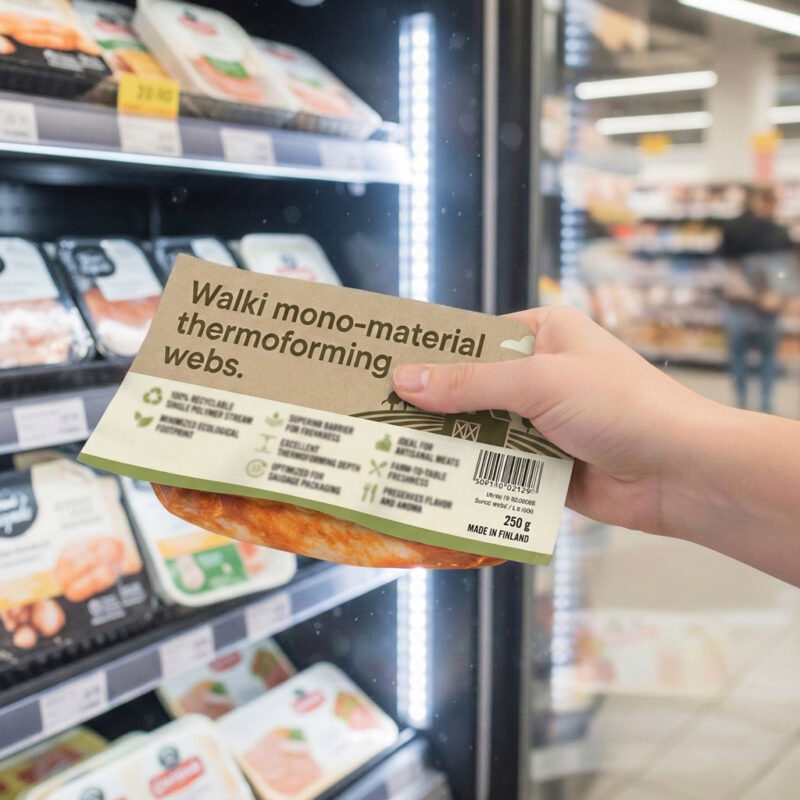
Meet Walki’s mono-material thermoforming basewebs – a PPWR-ready packaging solution that combines sustainability with high performance. These baseweb films form the protective bottom layer in vacuum and MAP (Modified Atmosphere Packaging) applications for foods like meat, sausages and cheese.
Unlike traditional multi-layer films that mix plastics and are hard to recycle, Walki’s basewebs use a single polymer (PE or PP) plus a thin barrier layer, making them fully recyclable in standard plastic streams. They deliver the same robust protection and shelf-life extension as conventional alternatives, prolonging freshness, preventing food waste and reducing CO₂ emissions, all while aligning with the latest circular economy goals.
-
The Challenge: Standard food packaging often uses Polyamide (PA) for thermoforming strength and Polyethylene (PE) for sealing. While effective, these mixed materials cannot be recycled easily. Moving to a single material (mono-material) often results in films that are difficult to form or lack the mechanical strength to hold their shape.
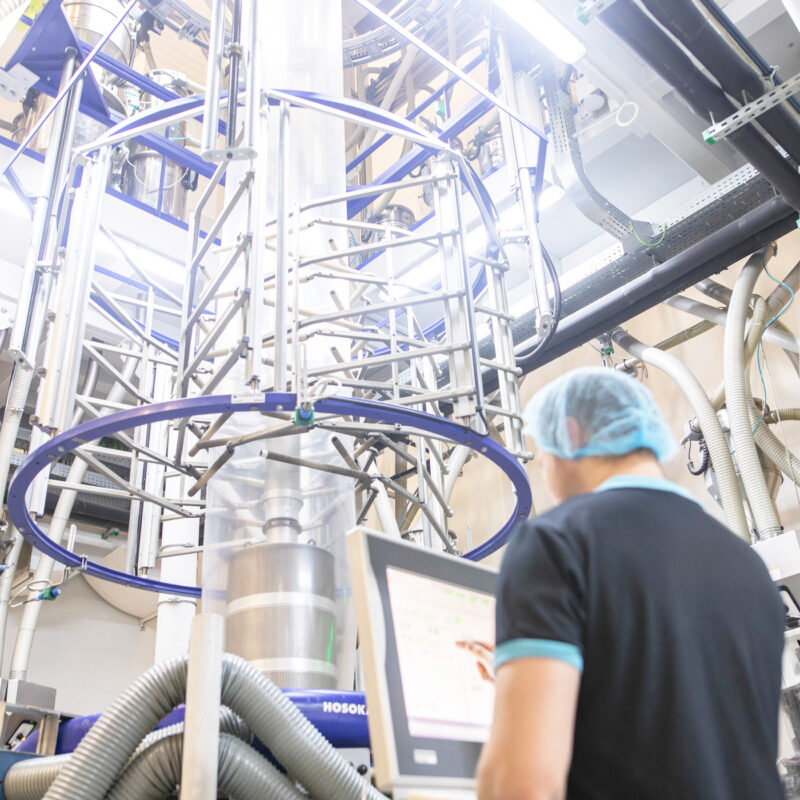
The Solution: Walki solves this through state-of-the-art blown film extrusion. By engineering specific polymer blends, we create a mono-material structure that offers the necessary toughness and forming properties without relying on non-recyclable PA layers.
Why it matters: This technology allows the film to stretch evenly into deep molds without thinning excessively or puncturing, while remaining chemically compatible with recycling streams.
The Result: A fully recyclable baseweb that runs efficiently on your existing thermoforming machines. -
Walki’s thermoforming basewebs are fully prepared for the EU Packaging and Packaging Waste Regulation (PPWR) and other upcoming sustainability standards. The PPWR legislation mandates that all packaging be recyclable or reusable by 2030 – Walki’s mono-material basewebs meet this requirement today. By choosing Walki®form basewebs, food packers and brands are proactively complying with future regulations:
- Designed for Recycling: The films have been developed in line with industry recyclability guidelines, meaning they can achieve high recycling ratings.
- Regulatory Peace of Mind: Adopting these basewebs now helps manufacturers stay ahead of legal requirements, avoiding last-minute packaging redesigns as 2030 approaches.
- Accelerating Sustainability Goals: Walki’s partners can confidently market their products as packaged in recyclable materials, enhancing brand reputation and meeting consumer demand for sustainable packaging.
-
Walki’s thermoforming basewebs are specially developed for food packaging applications that demand both high performance and sustainability. Use cases include:
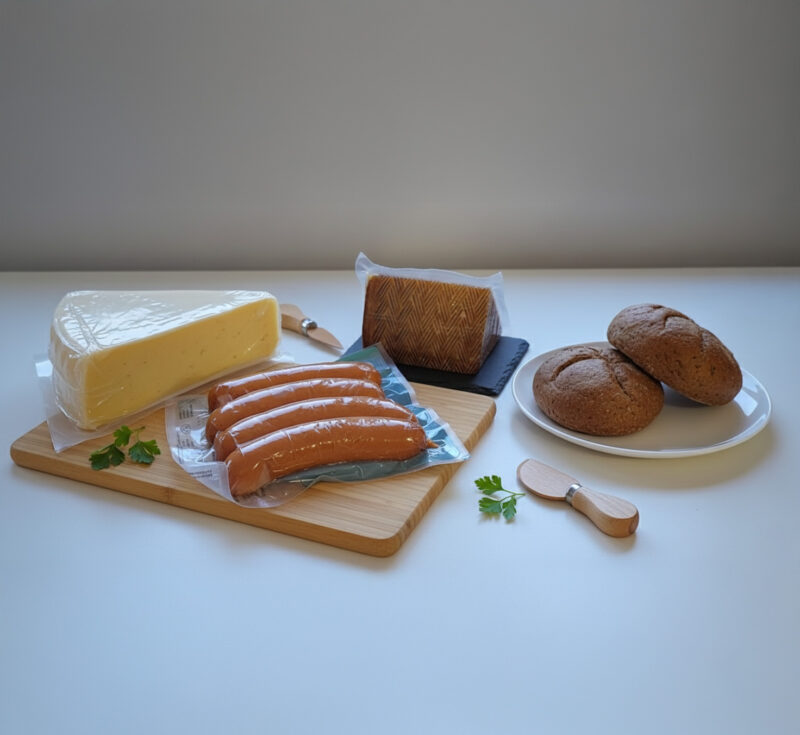
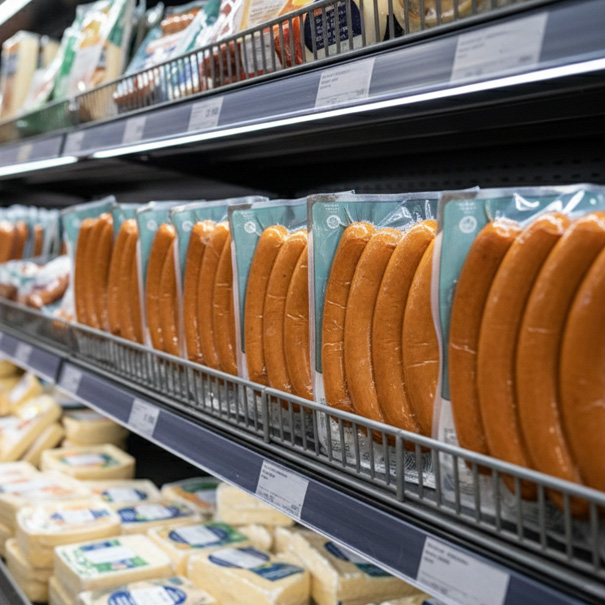
- Fresh Meat & Poultry: Vacuum packs for beef, pork, poultry cuts and sausages – maintains color and freshness, with strong seals even for products with sharp bones or edges.
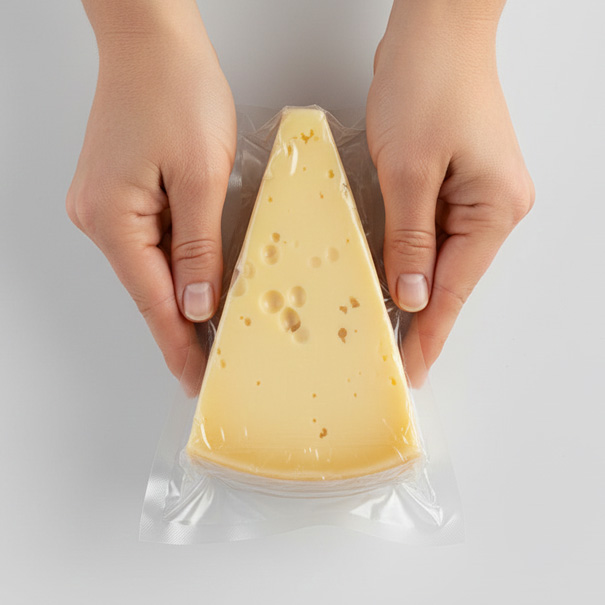
- Processed Meats & Cheeses: Thermoformed packs for sliced deli meats, whole sausages, blocks or slices of cheese – providing an excellent barrier against oxygen to prevent spoilage and mold.
- Seafood: Packing fish fillets or shellfish where odor and moisture barriers are critical. The mono-material films handle cold temperatures and moist products without delamination.
- Dairy & Prepared Foods: Suitable for items like butter, cheese or ready meals that use vacuum or MAP trays to extend shelf life. PP-based Walki basewebs can even handle higher heat processes (e.g. pasteurization or “boil-in-bag” applications for prepared meals).
- Frozen & Convenience Foods: Durable enough for frozen food packs or boilable vacuum packs (thanks to PP’s temperature resistance). Also useful for bakery goods or confectionery that require tight sealing and hygiene.
-
The Challenge: Standard food packaging often uses Polyamide (PA) for thermoforming strength and Polyethylene (PE) for sealing. While effective, these mixed materials cannot be recycled easily. Moving to a single material (mono-material) often results in films that are difficult to form or lack the mechanical strength to hold their shape.
The Solution: Walki solves this through state-of-the-art blown film extrusion. By engineering specific polymer blends, we create a mono-material structure that offers the necessary toughness and forming properties without relying on non-recyclable PA layers.
Why it matters: This technology allows the film to stretch evenly into deep molds without thinning excessively or puncturing, while remaining chemically compatible with recycling streams.
The Result: A fully recyclable baseweb that runs efficiently on your existing thermoforming machines. -
Walki’s thermoforming basewebs are fully prepared for the EU Packaging and Packaging Waste Regulation (PPWR) and other upcoming sustainability standards. The PPWR legislation mandates that all packaging be recyclable or reusable by 2030 – Walki’s mono-material basewebs meet this requirement today. By choosing Walki®form basewebs, food packers and brands are proactively complying with future regulations:
- Designed for Recycling: The films have been developed in line with industry recyclability guidelines, meaning they can achieve high recycling ratings.
- Regulatory Peace of Mind: Adopting these basewebs now helps manufacturers stay ahead of legal requirements, avoiding last-minute packaging redesigns as 2030 approaches.
- Accelerating Sustainability Goals: Walki’s partners can confidently market their products as packaged in recyclable materials, enhancing brand reputation and meeting consumer demand for sustainable packaging.
-
Walki’s thermoforming basewebs are specially developed for food packaging applications that demand both high performance and sustainability. Use cases include:
- Fresh Meat & Poultry: Vacuum packs for beef, pork, poultry cuts and sausages – maintains color and freshness, with strong seals even for products with sharp bones or edges.
- Processed Meats & Cheeses: Thermoformed packs for sliced deli meats, whole sausages, blocks or slices of cheese – providing an excellent barrier against oxygen to prevent spoilage and mold.
- Seafood: Packing fish fillets or shellfish where odor and moisture barriers are critical. The mono-material films handle cold temperatures and moist products without delamination.
- Dairy & Prepared Foods: Suitable for items like butter, cheese or ready meals that use vacuum or MAP trays to extend shelf life. PP-based Walki basewebs can even handle higher heat processes (e.g. pasteurization or “boil-in-bag” applications for prepared meals).
- Frozen & Convenience Foods: Durable enough for frozen food packs or boilable vacuum packs (thanks to PP’s temperature resistance). Also useful for bakery goods or confectionery that require tight sealing and hygiene.
Walki Experts
“Certain foods – like meats, sausages, and cheese, need a very effective barrier to stay fresh throughout their shelf life. In the past, that meant using complex multi-layer films that weren’t recyclable,” explains Håkan Sabel, R&D Manager at Walki. “Our main focus in developing the new mono-material thermoforming basewebs was to maintain that top-level protection for the food, so it doesn’t spoil, while making the packaging fully recyclable. It’s incredibly rewarding to see packaging that keeps food fresh and also supports a circular economy.”
We offer both PE- and PP-based mono-material thermoforming webs

Walki®Form 1000 MB
(PE-based)
Walki®Form 1000 MB is a recyclable, polyethylene-based (PE) thermoforming baseweb engineered for vacuum and modified atmosphere packaging (MAP) applications. It delivers excellent sealability, robust mechanical strength, and high barrier protection against oxygen and moisture – ensuring optimal freshness for meats, cheeses, and seafood. Designed for compatibility with existing recycling streams, it supports circular economy goals and complies with EU Packaging and Packaging Waste Regulation (PPWR) requirements. Ideal for brands seeking sustainable, high-performance food packaging without compromising product protection.
Walki®Form 3000 MB
(PP-based)
Walki®Form 3000 MB is a polypropylene-based (PP) thermoforming baseweb offering superior heat resistance and low post-shrinkage, making it ideal for high-temperature food packaging such as boil-in-bag or pasteurized products. Fully recyclable and PA-free, it provides excellent barrier properties and strong seal integrity, ensuring extended shelf life and reduced food waste. Compatible with existing packaging lines, it aligns with EU PPWR regulations and supports sustainability goals by replacing non-recyclable multi-material films with a mono-material circular solution.
Sustainability Focus
Sustainability is at the core of Walki’s thermoforming basewebs. By switching to recyclable mono-material packaging, companies can significantly cut down on plastic waste and environmental impact:
- Supporting Circular Economy: Traditional multi-layer packaging often ends its life in incinerators or landfills because it’s difficult to separate and recycle. Walki’s mono-material basewebs ensure that after use, the packaging can be collected, recycled, and reprocessed into new plastic products. This keeps valuable material in circulation rather than disposing of it after a single use.
- Reducing Carbon Footprint: When packaging is recycled instead of thrown away, it lowers the need for virgin plastic production and prevents the emissions associated with waste treatment. Additionally, Walki’s basewebs are lightweight and optimize material use, which can reduce transportation emissions and resource consumption over their lifecycle. Replacing a typical PA/PE multi-layer film with a mono-material PE film, for example, can mean fewer processing steps and potentially lower energy use in production.
- Minimizing Food Waste: Proper packaging has a direct sustainability benefit by preventing food spoilage. Nearly 30% of food produced is wasted globally, contributing to about 8 –10% of global greenhouse gas emissions. By extending shelf life and preserving food quality, Walki’s high-barrier basewebs help cut down on this waste. Less spoiled food means less unnecessary resource use and lower emissions from producing food that never gets eaten. In short, better packaging leads to a smaller food waste footprint.
Redefining structure:
Multi-Layer performance
based on a mono-material design
Designed for circular performance
Walki’s thermoforming basewebs have been designed from the ground up for circularity. “Circular performance” means the product performs its intended function, then cycles back into use rather than becoming waste. Here’s how Walki achieves that:
Recycle-Ready Structure
Both the PE-based and PP-based films are mono-polymers at heart. They’re compatible with widely available recycling processes (for example, PE streams in most countries readily accept all-PE packaging). Because the films are PA-free and consist mostly of one resin type, recyclers can reprocess them into high-quality regranulate. This regranulate can become raw material for new packaging or other plastic items, completing the loop.
Engineered for Identifiability
A subtle but crucial design element for circularity is making packaging that sorting machines can identify and separate. The mono-material nature and optionally transparent design of Walki basewebs means that in automated waste sorting facilities, they are recognized correctly (as PE or PP) and diverted to the right recycling bales. In contrast, multi-layer films often confuse sorting systems or contaminate recycling batches.
Compliance with Circular Design Guidelines
Walki’s development team followed best practices (like the CEFLEX Design for Recycling guidelines for flexible packaging) in engineering these films. This means factors like the type of barrier coatings, the inks/adhesives used with them, and the film thickness are all optimized for recycling without sacrificing performance. It’s packaging that’s “circular by design.”
Durable yet Resource-Efficient
The films are robust in use (to prevent product loss), but once their job is done, they don’t persist as an unrecoverable pollutant. In essence, they provide just the right amount of material to protect and preserve goods, and nothing more. This “rightsizing” of packaging ensures minimal resource wastage.
Long-Term Reusability of Material
The quality of plastic in Walki’s basewebs is high enough that after recycling, the material can have a second life in demanding applications. We’ve avoided additives or layers that degrade polymer quality. By designing for multiple cycles of reuse, Walki’s packaging aligns with the principles of a circular economy, where materials keep flowing and value is retained over time.
What makes Walki’s Thermoforming Basewebs Different?
Walki’s thermoforming basewebs redefine what recyclable packaging can do. Built from mono-material PE or PP, they combine sustainability with high-performance features like exceptional barrier protection and heat resistance. Free from PET and nylon, fully PPWR-compliant and backed by Walki’s innovation, these solutions are engineered to meet today’s demands and tomorrow’s regulations.
Circular design
Made from mono-material PE or PP
High-Barrier Protection
Food stays fresh for longer, reducing waste.
PPWR compliance – future ready
Meeting upcoming legal requirements
Nylon/PET-Free construction
Ensure full recyclability of all components.
Walki
Innovation
Solution that’s been rigorously tested
Comparison with Mixed-Material / Rigid Plastic Trays
| Walki Mono-material Thermoforming Basewebs | Mixed-Material Thermoforming Basewebs / Rigid Plastic Trays | |
|---|---|---|
| Material Structure | Single polymer (PE or PP) with integrated barrier layer | Multi-layer structures combining PET, PA, PE and others |
| Recyclability | Fully recyclable in standard PE or PP streams; PPWR-compliant | Often non-recyclable due to incompatible material combinations |
| Barrier Performance | High oxygen and moisture barrier; matches multi-layer performance | High barrier, but at the cost of recyclability |
| Heat Resistance | PE: standard; PP: high (suitable for pasteurization, boil-in-bag) | Varies; often requires complex material blends |
| Environmental Impact | Supports circular economy; reduces food and plastic waste | Contributes to landfill and incineration; limited recyclability |
| Circular economy alignment | Designed to meet EU 2030 recyclability targets | Increasingly restricted under PPWR; subject to higher EPR fees |
| PPWR Ready | Aligned with future classes | May face restrictions |
Where advanced extrusion meets premium printing
Extrusion engineered
for next-level packaging.
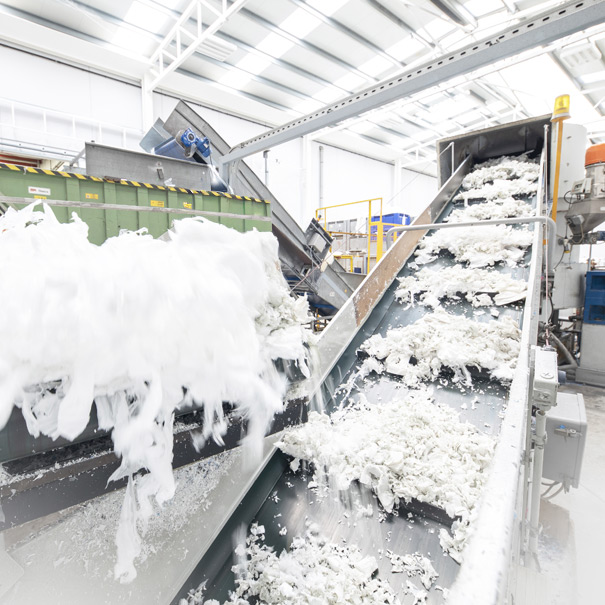
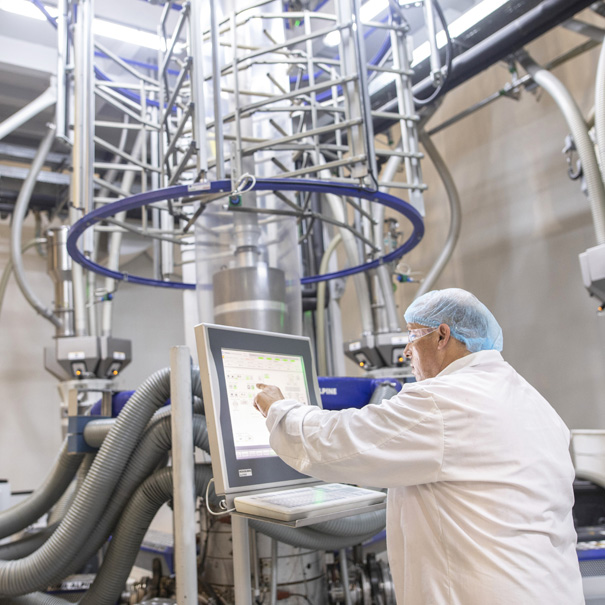
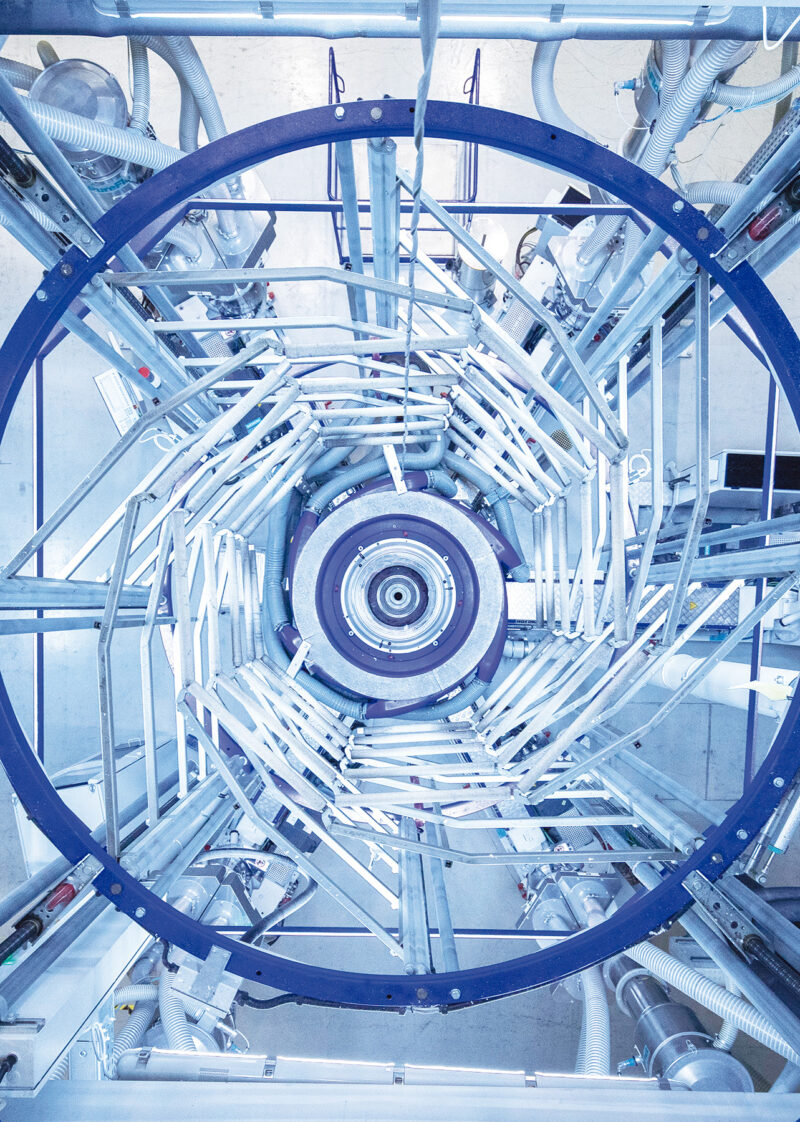
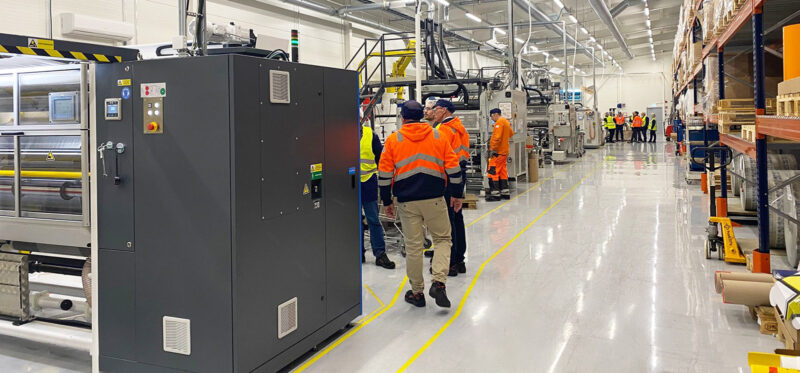
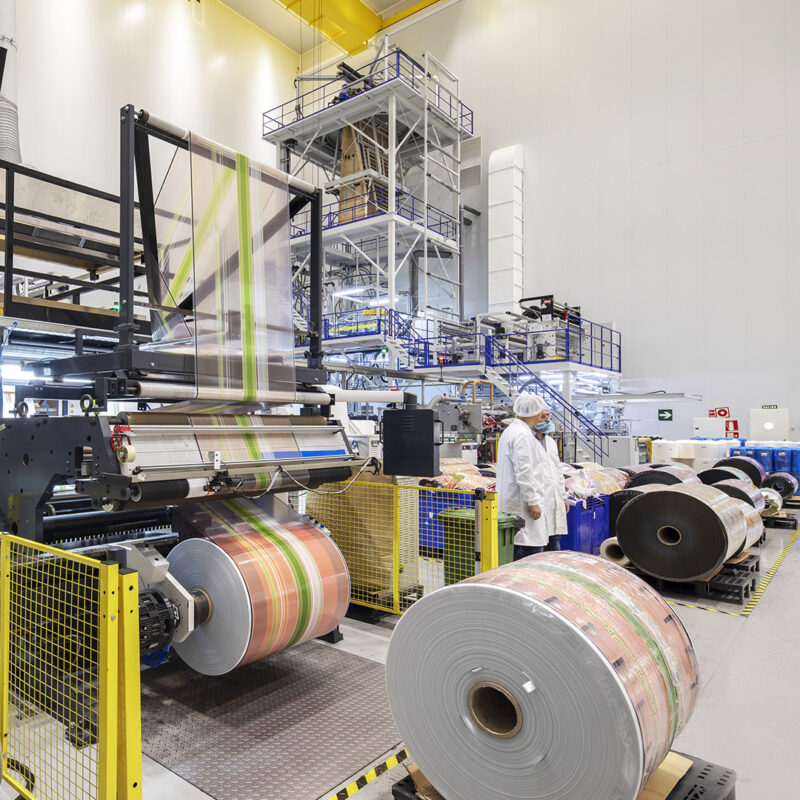
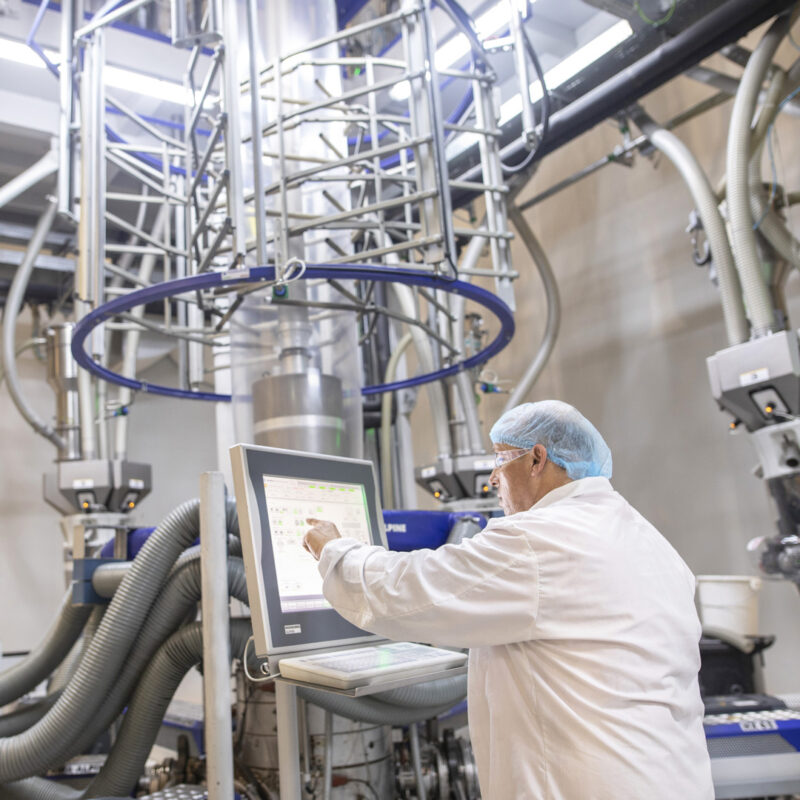
Walki brings together one of the most extensive extrusion capabilities in the industry with cutting-edge printing technology. With more than 26 blown-film extrusion lines, we produce high-quality PE films, MDO-PE structures and certified compostable films at scale. Our facilities are equipped with next-generation flexographic presses capable of water- and solvent-based inks, as well as state-of-the-art digital printing for fast, precise and visually striking results. From film extrusion to final print, every step is controlled in-house, ensuring consistency, speed and premium quality for the world’s leading brands.
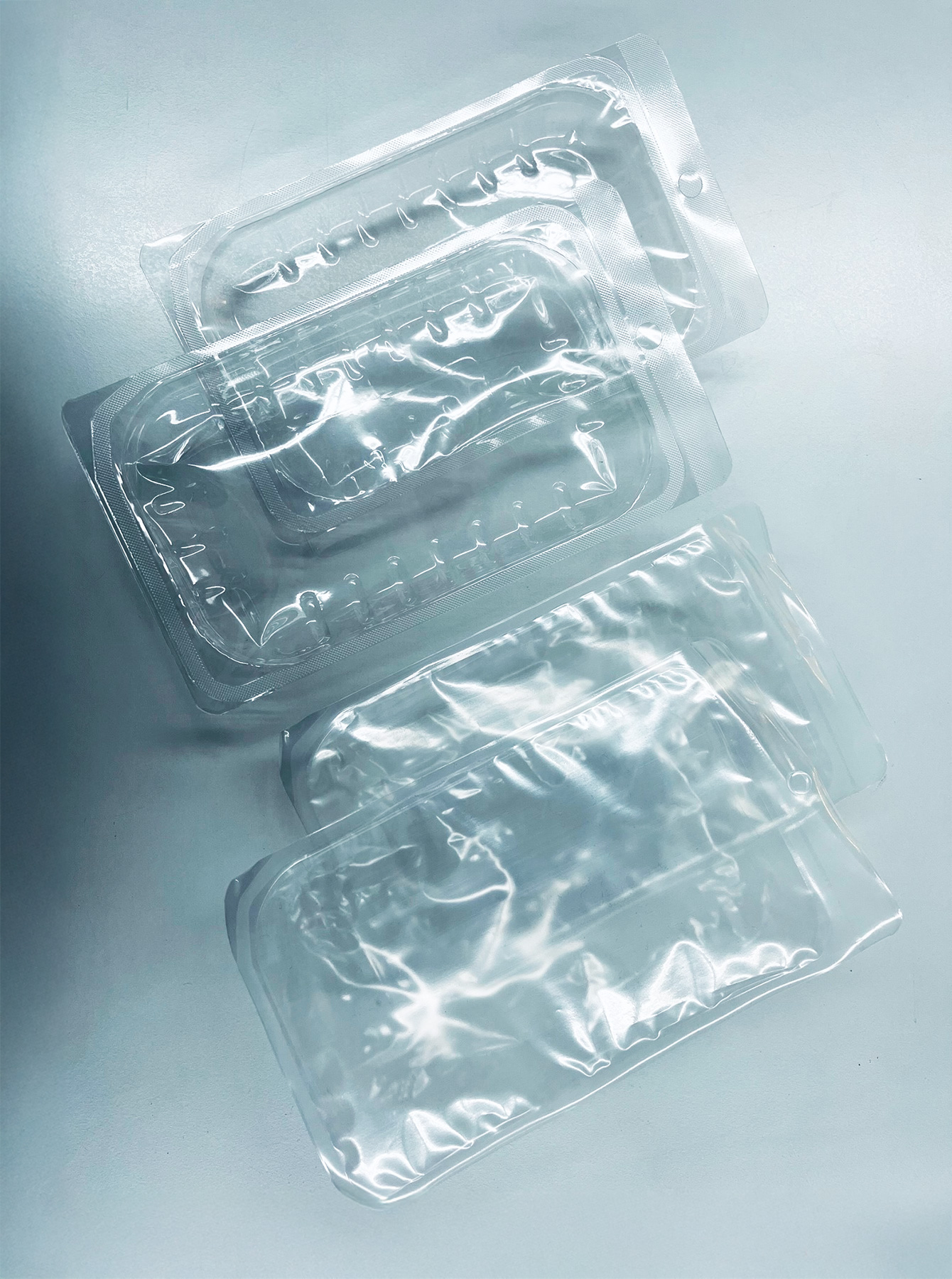
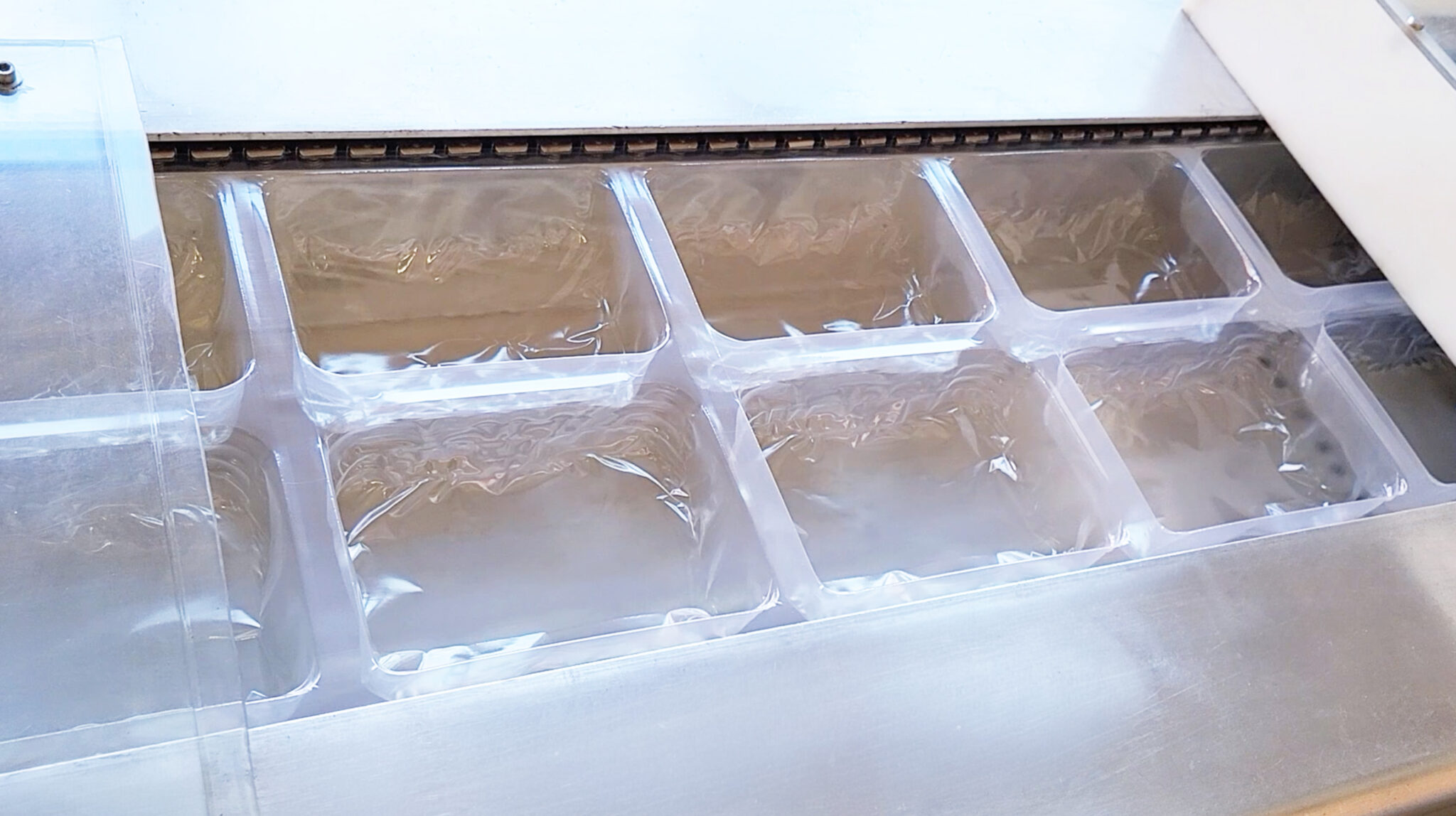
A thermoforming baseweb is the bottom film in a form-fill-seal packaging process. It starts as a flat, flexible film that, under heat and pressure, is shaped into a tray or pouch to hold a product. In food packaging, the baseweb forms the bottom of a vacuum pack or MAP pack (for items like meats, cheeses, etc.), and a top film is sealed to it to enclose the product. The baseweb provides a protective barrier and structural support around the food. Traditional basewebs often use multiple plastic layers (for strength and barrier), but those mixes are hard to recycle.
It is considered PPWR ready because it is a mono-material solution (made of >90% PE or PP) that meets the European Union’s “Design for Recycling” guidelines. Unlike traditional multi-layer films, it can be recycled in standard facilities, complying with the 2030 target for all packaging to be recyclable.
Walki achieves the necessary mechanical stiffness and toughness through advanced blown film extrusion technology and the use of specialized high-performance polymer blends. This creates a rugged structure that can withstand the thermoforming process without needing non-recyclable Polyamide (PA) layers.
They are suitable for a wide range of products including fresh meat, processed meat, fish, and cheese (using Walki®Form 1000 MB PE) as well as microwaveable ready meals and hot-fill applications (using Walki®Form 3000 MB PP).
No. Walki’s basewebs are equipped with high-performance gas barriers (like EVOH) that match the oxygen and moisture protection of traditional laminates, ensuring that food shelf life is maintained to prevent waste.
How can we help you today?
Please share your queries by completing the form below. Our team of experts will get in touch with you as soon as possible to assist you.