
A fibre-based lid for cherished noodles
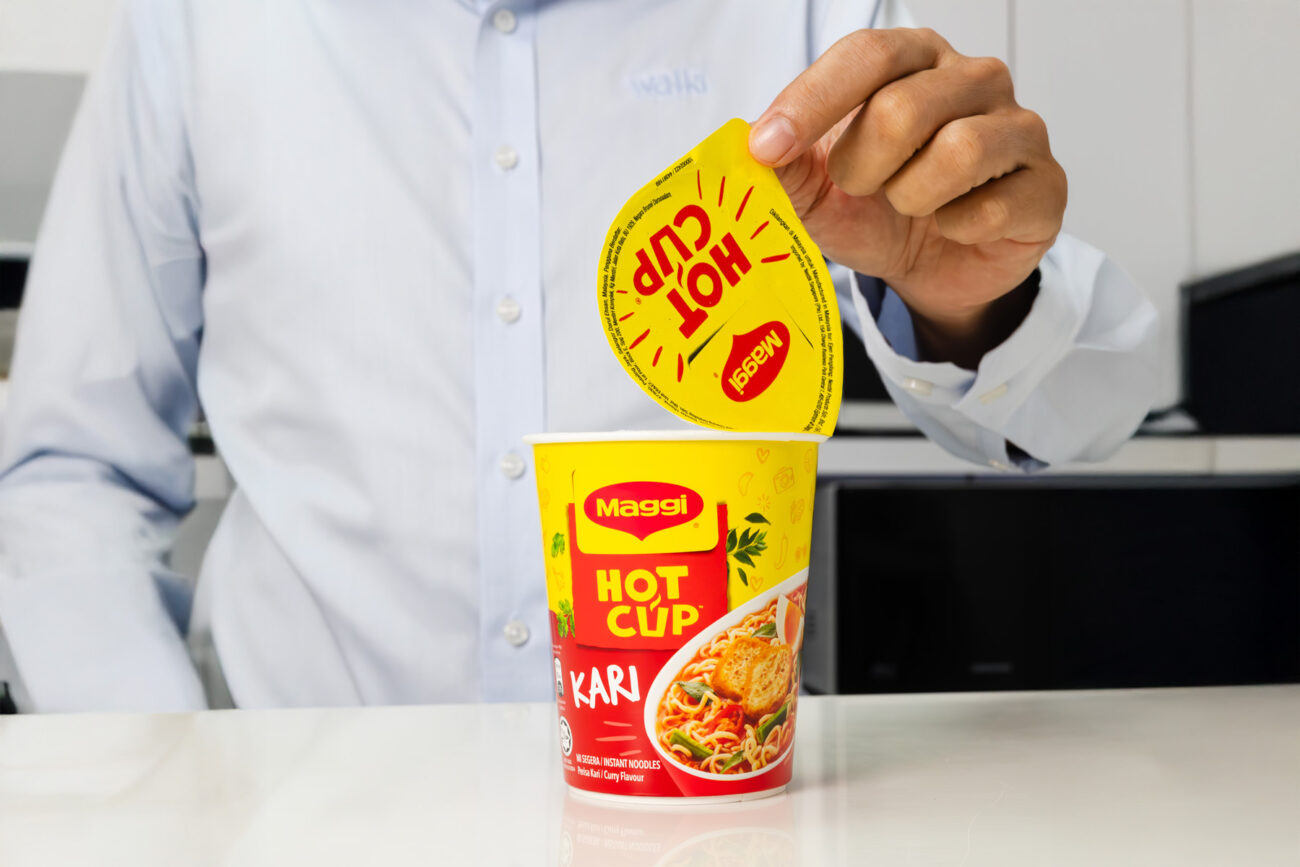
Billions of instant noodle cups are consumed every year in Asia, and even the seemingly smallest packaging details can carry a huge environmental impact. Nestlé and Walki have joined forces to replace the plastic lid of MAGGI noodles with a fibre-based solution, proving that a small change can make a big difference.
Instant noodles are deeply woven into culinary traditions across Asia. Served in a single cup, they are quick to prepare, adaptable to local tastes, and perfect for busy lifestyles. According to the World Instant Noodles Association, over one billion instant noodle servings were consumed in Malaysia alone in 2024.
Traditionally, the lids of noodle cups have been made from aluminium thanks to its strong barrier properties.
“The noodles need an airtight seal and protection against moisture and contaminants”, says William Wong, Sales Manager for Walki in Malaysia. But aluminium comes with some drawbacks: a high carbon footprint and a tendency to tear when removed from the cup. To solve this, many brand owners have switched to plastic-based lids. While functional, plastics create waste that may end up in nature.
Staying ahead of the curve
Although no regulation like the EU’s PPWR (Packaging and Packaging Waste Regulation) exists in Asia, Nestlé wanted to move ahead of the curve. In line with its commitment to reduce virgin plastic by one-third by 2025, the company set out to replace the plastic lid of its popular MAGGI Cup with a paper-based alternative recyclable in the paper stream.
Finding a more sustainable lid is part of a multi-pronged initiative to reduce plastics in our packaging. It’s both a functional improvement and a deliberate brand signal aligned with our environmental commitments”, says Ivy Tan Link Cheg, Executive of Food Business at Nestlé.
For Nestlé, packaging is a powerful touchpoint. Market research shows that consumers increasingly expect visible action on sustainability and that packaging communicating environmental benefits enhances brand perception and purchase decisions. In Asia’s fragmented noodle market, where hundreds of brands compete, such signals also helps MAGGI stand out.
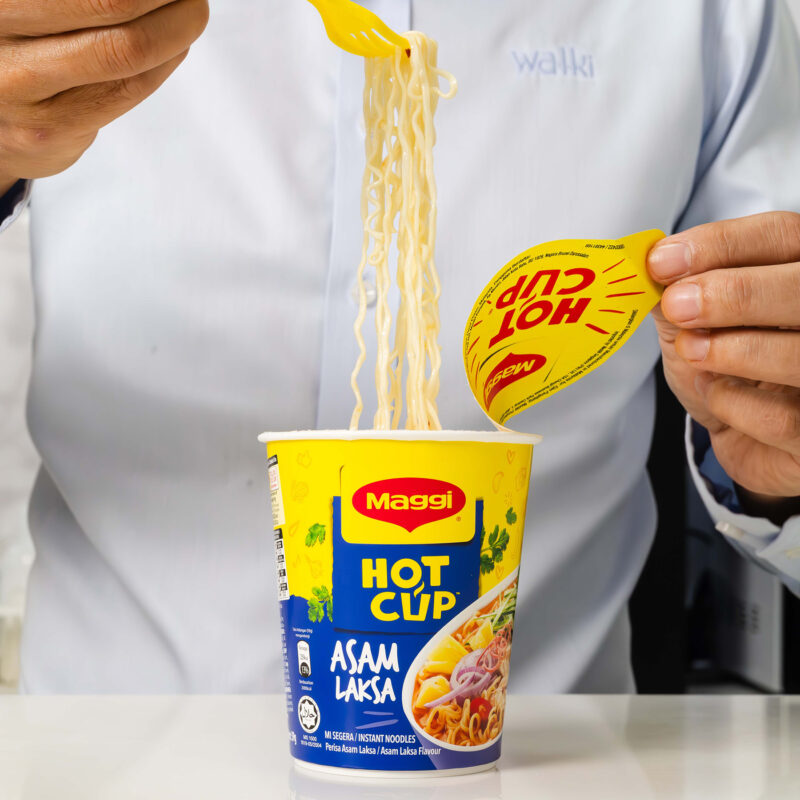
To preserve freshness and flavour, the noodles require an airtight seal that protects against moisture and external contaminants.
High demands
The development of the new fibre-based lid was the result of close collaboration between Nestlé and Walki. Wong initiated the project by sending cups to Walki’s technical team in Valkeakoski, Finland. There, Henri Torkkola, Technical Sales and R&D Manager, and his colleagues started to explore different solutions.
”The demands were high. The MAGGI noodles must retain their quality over along shelf life, so the lid has to match aluminium or plastic in functionality while reducing carbon footprint. We managed to balance these needs and created a fibre-based lid with strong sealing capabilities and excellent printability. The solution is continuously being refined with recyclability in focus”, explains Torkkola.
The new MAGGI cups with Walki’s lids are now on the market in Malaysia and Singapore. The response has been positive. For Nestlé, the change demonstrates how even small details in packaging can support global sustainability goals while strengthening brand equity.
” Working with packaging innovators like Walki ensures that our sustainability story is backed by science, safety and smart design. Together we are proving that even small changes like a lid can make a big difference”, says Ivy Tan.