
Circular Classroom: learning circularity from a young age
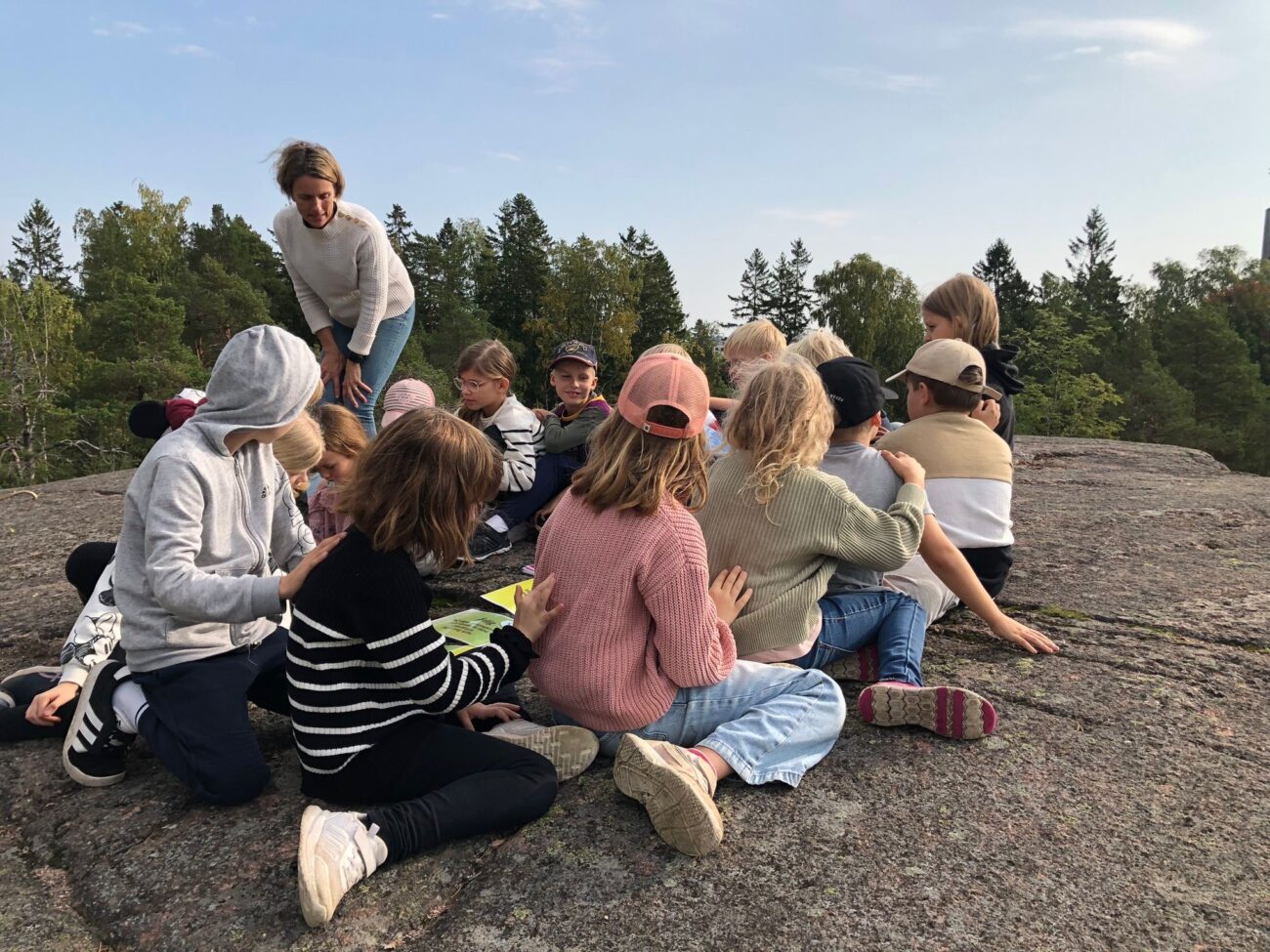
Kids are curious by nature and quick learners. So what better way to increase circular thinking than catching them young? That is the thinking behind the Circular Classroom concept developed by Leila Acaroglu and sponsored by Walki. Johanna Berlin, a primary school teacher in Finland, was among the first teachers to use the Circular Classroom materials with her pupils.
Johanna Berlin has used the materials in her classroom since 2019. The first module dives into the very essence of the circular thinking: how to go from linear to circular? Berlin asked her pupils to bring broken home electronics to school so that they could do the “product tear-down autopsy” which is part of the Circular Classroom programme.
“This type of equipment is often discarded in many households. By exploring the components inside all the hairdryers and whatever the kids brought to school, we were able to reflect on different ways in which each of those components could potentially be recycled or re-purposed”, explains Berlin.
She organised a competition where the children had to come up with creative ways to repurpose the equipment. This experiment ignited the children’s curiosity to start reflecting on how old appliances can get a new life.
“They came up with very innovative examples. I was once again surprised at how much creativity our young students have!”
Berlin did this with six graders, but the circular classroom material can also be adapted to younger kids. With her younger pupils, Berlin has organized field trips to the seashore, where they collected trash and put up an exhibition with the findings.
Berlin took part in the introductory workshop with Leyla Acaroglu, who designed the programme, but says the programme is logical and easy to use even without guidance.
“I like how functional it is. There are lots of great experiments like counting your own carbon footprint. This is a better way to start a dialogue instead of just listing what you should or shouldn’t do”, says Berlin, adding that the material is overall well-designed with explanatory videos and workbooks that can be used in a very hands-on manner.
“There are also posters for the classroom walls and discussion cards to facilitate the dialogue between the pupils.”
Still, Berlin finds that the greatest outcome is when these learnings go beyond the classroom.
“When kids start to think of these matters from an early age, like if they go on a picnic they know to bring their own bottle and learn to be conscious of the objects they purchase and how to discard different products and packages in a sustainable way.”
Berlin, working in an elementary school where the same teacher typically is responsible for all subjects, had the freedom to use the Circular Classroom material as she saw fit. Sometimes it was during the science lesson and sometimes in Swedish class for example. She went through the three modules with accompanying workbooks in four months, devoting about two hours a week.
“I recommend Circular Classroom because the material is easy to understand, very nicely made, it has a logical sequence of introducing the topics, and it is interactive. A lot of students today feel anxious about the environment and discussing these issues openly gives them hope that there are things we can do to fix it. The key is to have the right tools to facilitate a dialogue.”
Fact box: The Circular Classroom for a fun and engaging learning experience
The Circular Classroom, is an educational toolkit designed to integrate circular economy concepts into school curricula. It is structured into three main modules, each accompanied by interactive videos and downloadable workbooks.
The Educator Support Manual provides guidance on integrating these modules into classroom settings, offering lesson planning tools and aligning content with educational standards. The material is available in multiple languages, including English, Finnish, Swedish, and Estonian.
Circular Classroom is a free open-source learning platform. You can find it on www.circularclassroom.com.