

Designing materials that perform today and enable tomorrow
Sustainability, built into performance
At Walki, sustainability is not a separate agenda. It is embedded in how we design materials, select raw inputs, optimise processes and support our customers’ transition towards more circular packaging and technical solutions.
Our approach focuses on measurable impact across the value chain, from responsible sourcing and emissions reduction to designing materials that support recycling and circular systems. We work closely with brand owners, converters and partners to ensure performance, compliance and long-term viability go hand in hand.
This agenda is structured around three priorities: sustainable raw materials, GHG emission reductions and a circular future.
Explore our latest Sustainability Report here:
Sustainability is at the heart of what we do, embedded in our everyday actions and decision-making. As an industry leader in advanced materials conversion, Walki is committed to transforming materials and creating sustainable solutions that extend the life of resources, help our customers to reduce their carbon footprint and minimize waste towards a circular economy.
Leif Frilund
President and CEO
Enabling the shift to circularity
From linear to circular
We are moving beyond traditional linear models of resource use towards circular systems built on efficiency, resilience and long-term value. This shift requires coordinated change across energy, materials and consumption patterns.
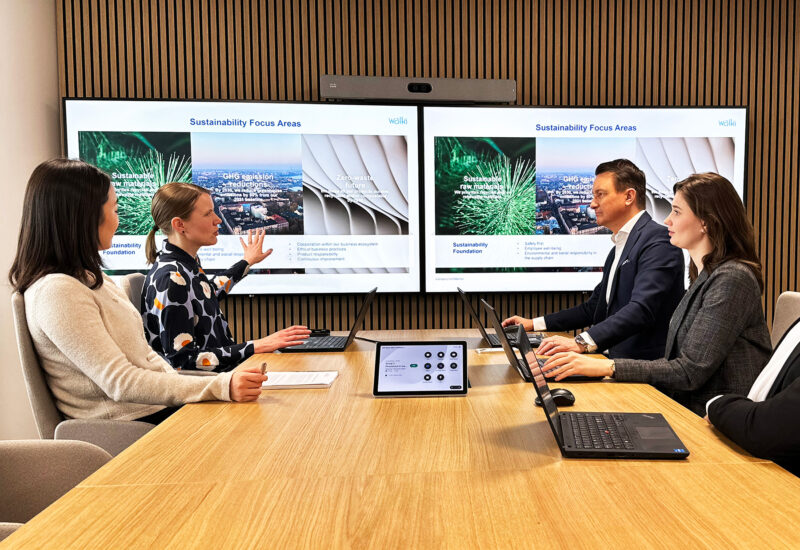
To drive measurable progress, our sustainability agenda is structured around three focus areas. Each is supported by clear 2030 targets, guiding our actions and ensuring accountability as we work towards a circular and low-carbon future.
Sustainability Focus Areas

Sustainable
raw materials
Reducing climate impact through responsible sourcing, increased recycled and renewable content, smarter use of fibre, plastics and aluminium.
GHG emission
reductions
Reducing greenhouse gas emissions across operations and value chains through energy efficiency, lower-impact materials and collaborative action.

Circular
future
Designing materials for recyclability, efficiency and long-term use to support the transition from linear models to circular systems at scale globally.
Sustainable raw materials
Sustainable materials that minimise waste and maximise resource efficiency
Sustainable raw materials require a long-term perspective. At Walki, this means ensuring that the resources we use today remain available for future generations, while reducing environmental impact and supporting circular material systems.
We focus on responsible sourcing, material efficiency and the increased use of recycled and renewable inputs. By making informed material choices and working closely with partners across the value chain, we reduce our climate footprint while maintaining the performance, safety and reliability our customers expect.
Why it matters
Purchased raw materials account for over 70% of Walki’s annual greenhouse gas emissions. Reducing the climate impact of these materials is therefore one of the most effective levers for achieving our climate targets and supporting the transition to a low-carbon future.
Material selection plays a decisive role not only in emissions reduction but also in resource efficiency, recyclability and long-term availability.
Our approach
We aim to reduce our reliance on virgin, fossil-based materials and increase the use of recycled and renewable alternatives across our portfolio. This includes expanding the use of fibre-based materials, increasing recycled content and adopting more sustainable plastic solutions such as recycled and bio-based polymers.
We are also aware of the high CO₂ intensity of aluminium. Where aluminium is required for technical performance, particularly in construction applications, we focus on minimising its use and sourcing aluminium with a lower climate impact.
Fibre-based
materials
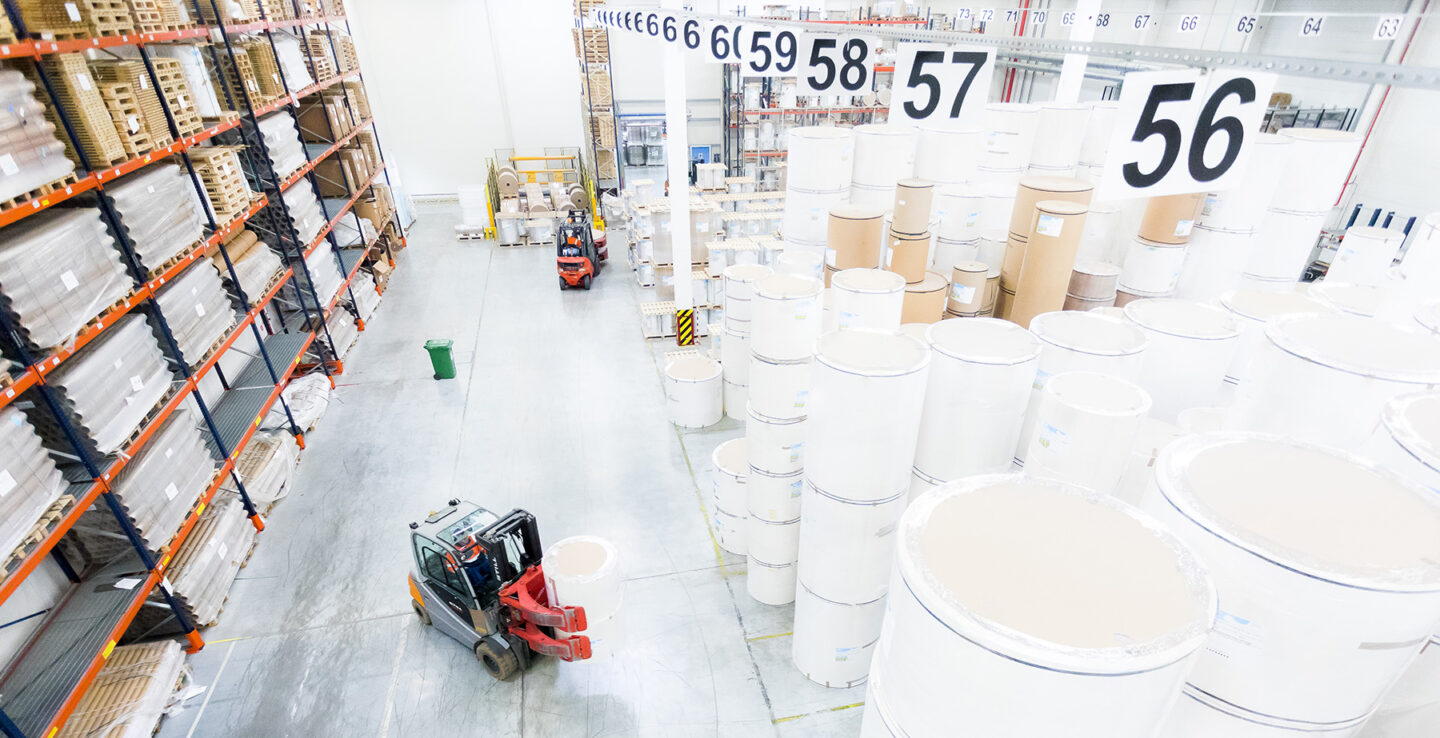
Fibre-based raw materials are considered sustainable when they originate from responsibly managed forests that support forest regeneration and biodiversity. Certified sourcing and increased use of recycled fibres are central to our fibre strategy.
Our actions
- Purchase certified fibre materials (FSC® or PEFC™) to ensure responsible sourcing
- Increase the share of recycled fibres to reduce pressure on virgin resources
Our targets
- 100% certified paper and board materials in all virgin fibre-based products
- At least 50% recycled or renewable content in fibre-based products
Plastics
Plastics are lightweight, strong materials with excellent barrier properties and can contribute to improved life-cycle performance of products. However, fossil-based plastics rely on non-renewable resources and generate high CO₂ emissions.
To reduce dependency on virgin fossil plastics, we focus on more sustainable plastic alternatives and smarter material design, always ensuring functionality, safety and recyclability.
Our actions
- Increase the use of bio-based and recycled plastics
- Reduce overall plastic use through material optimisation
- Design plastic-based products for recyclability and circularity, with a focus on mono-material structures
- Replace plastics with fibre-based solutions where feasible, without compromising performance
Our targets
- At least 25% recycled or renewable content in plastic-based products
Aluminium
Aluminium foil is mainly used in solutions for the construction sector, where durability and performance are critical. Aluminium typically has a high CO₂ intensity, making its responsible use essential.
Our actions
- Minimise the use of aluminium where technically possible
- Work closely with suppliers to source aluminium with lower climate impact, including aluminium produced using hydropower, significantly reducing greenhouse gas emissions
Collaboration and innovation
Achieving our material goals requires close cooperation across the value chain. We work with suppliers and customers to identify, develop and scale more sustainable raw materials, while ensuring product safety, quality and functionality.
Our focus areas
- Developing fibre-based alternatives to plastic packaging where feasible
- Using polymers responsibly, balancing performance and recyclability
- Increasing the share of recycled and renewable materials
- Expanding the use of certified and recycled fibre-based papers and boards
Current progress (2024)
- 71% of fibre-based raw materials are FSC® or PEFC™ certified (up from 69% in 2023)
- 22% of total raw materials are recycled (up from 18% in 2023)
- 67% of all raw materials are bio-based, renewable or recycled (unchanged from 2023)
GHG emission reductions
Acting on climate impact across operations and value chains
Climate change is one of the most significant challenges of our time. The rising concentration of greenhouse gases in the atmosphere drives global temperature increase and more frequent extreme weather events. Staying within planetary boundaries requires decisive action, and at Walki, reducing GHG emissions is a core element of our sustainability agenda.
We focus on measurable reductions across our entire value chain, addressing both our own operations and the upstream and downstream activities where the majority of our climate impact occurs.
Our commitment
GHG emission reduction is one of Walki’s three key sustainability priorities. We have set ambitious, science-based targets to reduce emissions by 2030, covering all relevant emission scopes and aligned with the Paris Agreement’s 1.5°C pathway.
Our targets (base year 2021):
- Scope 1 and 2: Reduce absolute GHG emissions by 54% by 2030
- Scope 3: Reduce GHG emissions intensity by 52% per million EUR of value added by 2030
These near-term targets have been validated by the Science Based Targets initiative (SBTi), confirming that our climate actions are grounded in science and aligned with global climate goals.
Understanding our emissions
A clear understanding of our emissions profile allows us to focus efforts where they have the greatest impact. While Scope 1 and 2 emissions represent only around 2% of our total emissions, we have defined dedicated reduction targets for these categories and address them with the same level of ambition as larger emission sources.
The majority of Walki’s climate impact occurs within Scope 3, particularly in raw material sourcing, transportation and product end-of-life.
How we plan to achieve our targets
Scope 1 and 2:
Our own operations
Direct and indirect energy-related emissions mainly originate from energy use in production. To reduce these emissions, we focus on:
- Increasing energy efficiency across all plants through targeted improvement programmes
- Investing in renewable and low-carbon energy sources
- Expanding the use of green electricity
- Implementing heat recovery and other energy optimisation systems
Scope 3:
Our value chain
More than 70% of our total emissions originate from the production of purchased raw materials. Reducing these emissions is therefore a key lever in our climate strategy. We are improving the quality and coverage of emissions data to identify hotspots and guide effective action.
Key initiatives include:
- Renewing our product portfolio to reduce material intensity
- Introducing innovations that require fewer or lower-impact inputs
- Increasing the share of recycled and renewable raw materials
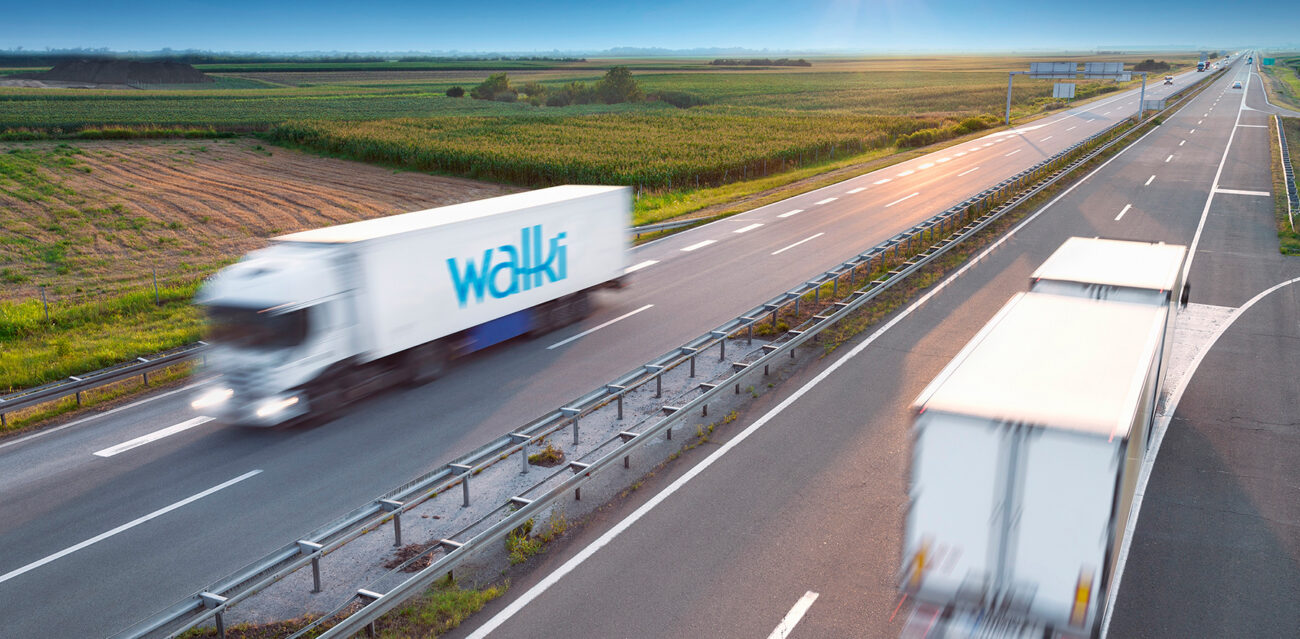
Transportation accounts for approximately 13% of our emissions. Here, our focus is on improving data accuracy to better understand reduction potential and guide future actions across logistics.
End-of-life is the third largest emission source. We address this by designing products for recyclability or compostability, in line with the objectives of the EU Packaging and Packaging Waste Regulation (PPWR), supporting lower emissions at the end of the product life cycle.
Collaboration for climate impact
Achieving meaningful Scope 3 emission reductions requires close collaboration across the value chain. We work hand in hand with suppliers and customers to co-develop low-carbon materials and solutions, ensuring that innovation supports both performance requirements and climate targets.
Current progress
- 92% of total energy use comes from renewable and other non-fossil sources
(85% in 2023)
Circular Future
Keeping materials in use, by design
The future must be circular. Materials should remain in use for as long as possible, with waste and resource loss kept to a minimum. In a circular economy, products are designed for reuse, recycling and renewal rather than disposal.
For Walki, this means developing packaging solutions that protect goods efficiently while keeping valuable materials in circulation. Circularity is not an add-on, but a core design principle that guides how we develop materials, products and processes.
A circular future starts with design
Packaging plays a vital role in protecting products, maintaining hygiene and reducing food waste. At the same time, it must be designed responsibly to enable circular material flows.
At Walki, we carefully evaluate what materials are truly needed for each application and how they can be designed to support circularity. Our design approach is guided by three key questions:
Fibre-based materials are renewable and can be designed to be easily recyclable.
Where plastic is required for barrier protection or durability, we prioritise recyclable mono-material structures.
We aim to minimise material use without compromising product performance, safety or functionality.
How we contribute today
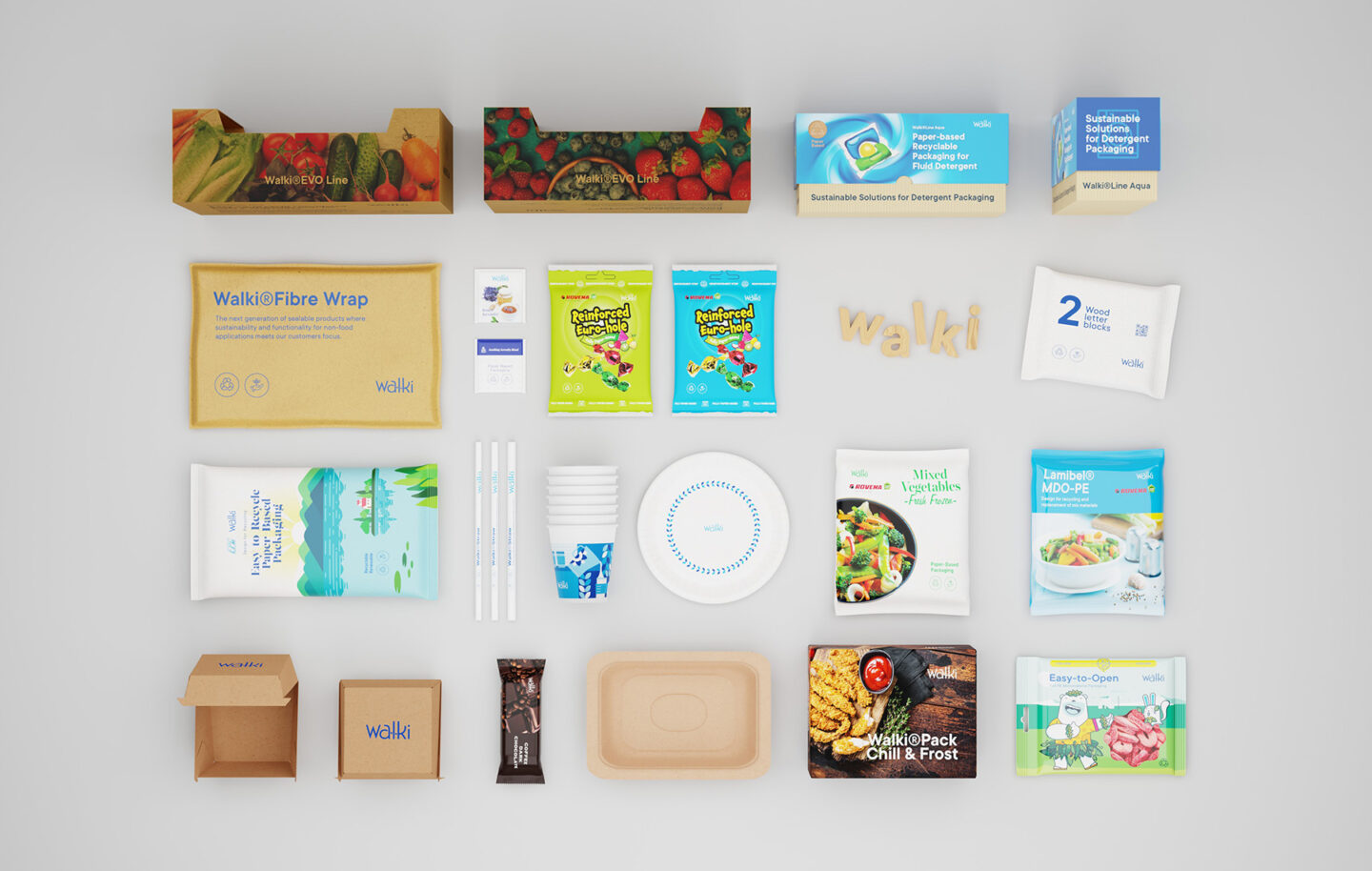
Our packaging portfolio already includes a wide range of solutions that are recyclable or compostable. In addition, we offer products that are design for recycling ready, meaning that the pathway to recyclability is clearly defined.
Our circular-ready portfolio includes:
- Fibre-based materials that replace plastics where possible
- Mono-material solutions designed for recycling
- Recyclable or compostable laminates and coatings
- Packaging solutions that balance protection with material efficiency
Since 2024, Walki has operated its own recyclability evaluation laboratory in Pietarsaari, Finland, enabling faster assessment and validation of new material innovations.
We also focus on reducing production waste and increasing the use of recycled raw materials across our operations.
Current progress (2024):
- 86% of the packaging portfolio is recyclable, compostable or design for recycling ready (82% in 2023)
- 69% of sold packaging products are recyclable or compostable (62% in 2023)
- 70% of production waste is recycled or reused (unchanged from 2023)
- 19% of products are durable (20% in 2023)
Our ambition for the future
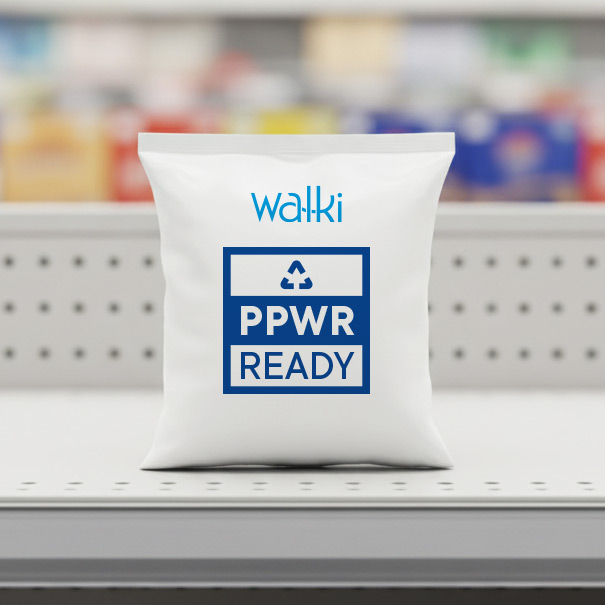
Together with our customers, we aim to make our entire packaging product portfolio recyclable and/or compostable by 2030, fully aligned with the EU Packaging and Packaging Waste Regulation (PPWR). This target supports our broader ambition to transform our business model and value chain towards full circularity.
To achieve this, we will:
- Invest in innovation and R&D to develop new recyclable and compostable material combinations
- Collaborate closely with customers and suppliers to close material loops
- Increase the use of recycled raw materials in fibre- and plastic-based products
- Reduce waste across production sites and operations
- Design every new packaging solution for recyclability, compostability or reuse
Safety and quality remain top priorities at every stage of this transition.
Circularity beyond packaging
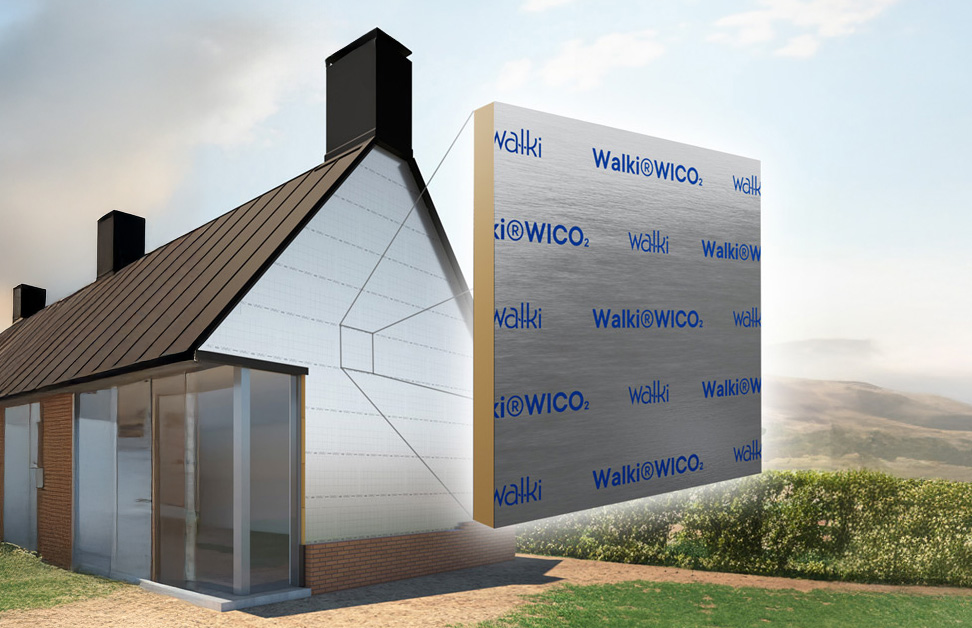
For products serving the construction sector, our short-term focus is on durability and functionality. These materials are typically integrated into larger structures with lifetimes spanning several decades, where the main environmental benefits occur during the use phase, such as improved energy efficiency in buildings.
In the long term, we continue to address circularity by advancing design for recycling and supporting the development of separation technologies and collection infrastructure for end-of-life components.